Why do men get on one knee to propose? The gesture usually combines respect, vulnerability, tradition, and a clear promise of commitment. It creates a small, serious moment in which one person asks another to build a life together. But kneeling is a custom, not a rule, and the best proposal is one that fits the couple.
For some people, one knee feels deeply romantic. For others, it may feel old fashioned or too tied to a gender script. Understanding the meaning behind the gesture can help you decide whether to keep it, change it, or create something entirely your own.
Why Do Men Get on One Knee to Propose? the Gesture's Long History
A Public Gesture with Private Meaning
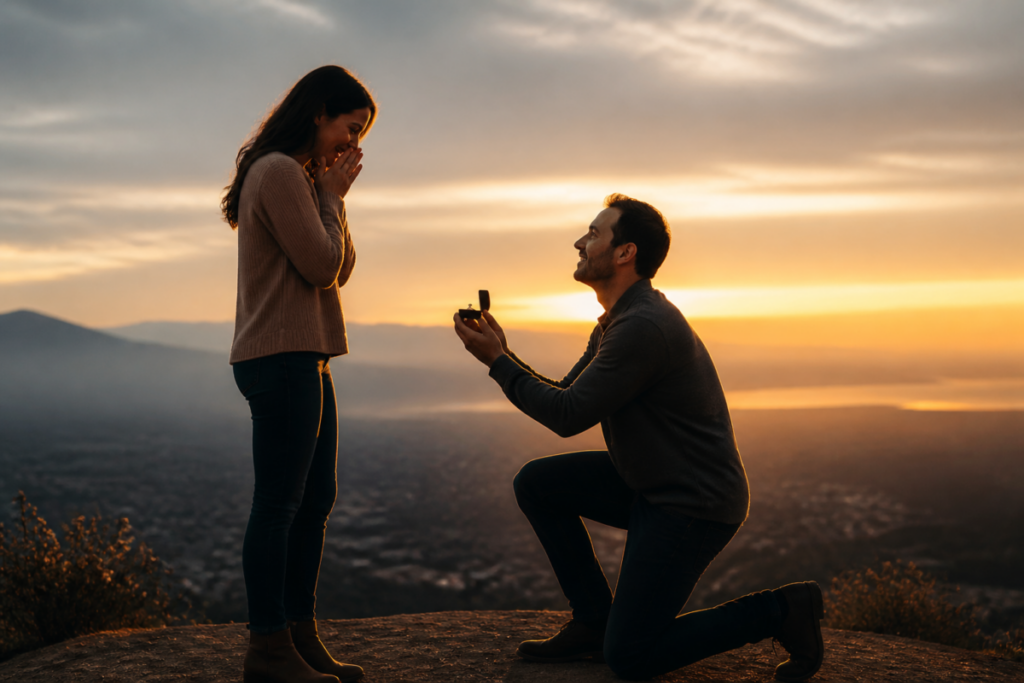
Imagine a quiet proposal at the end of a walk. One person has rehearsed the words all day, but when the moment arrives, those words suddenly feel too small. He takes a breath, lowers himself to one knee, and looks up. The movement says, This matters enough for me to pause everything.
That scene is fictional, but the feeling is familiar. Kneeling changes the shape of the moment. The person standing appears taller, while the person kneeling becomes more open and exposed. That contrast can make the request feel humble rather than casual.
Across many settings, kneeling has been linked with respect, devotion, service, prayer, or a request for favor. Those meanings do not point to one exact origin for the marriage proposal. Instead, they help explain why the posture can feel serious and emotionally charged. For related context, our piece on can men wear white to a wedding? etiquette guide is worth a read.
The gesture is a symbol, not a complete message. Its meaning comes from the words, the relationship, and the care behind the decision. A person can kneel with deep love, while another person can offer the same love without kneeling at all.
Tradition Is Not a Command
Proposal customs change as relationships change. The familiar image of a man kneeling before a woman reflects one common social script, but it does not describe every couple. People propose in different ways, including women proposing to men, couples choosing together, and partners creating private rituals that have no old template.
This matters because tradition can offer warmth, but it can also create pressure. A person may wonder whether a proposal is less real without the ring box, the speech, or the one knee. None of those details can decide the strength of a future marriage.
Think of tradition as a recipe passed through a family. You can follow it closely, change an ingredient, or cook something new. The recipe may carry meaning, but the meal still belongs to the people sharing it. You are allowed to keep the symbol without surrendering your choice.
If kneeling feels natural, use it. If it feels like acting out a role, do not force it. A proposal should mark the relationship you have, not perform a relationship for an audience.
What One Knee Communicates About Commitment and Vulnerability
The Body Says What Words Struggle to Hold
A proposal asks a large question in a small space: will you build a life with me? Even couples who have discussed marriage may feel the weight of saying it out loud. Kneeling can give the question a physical shape.
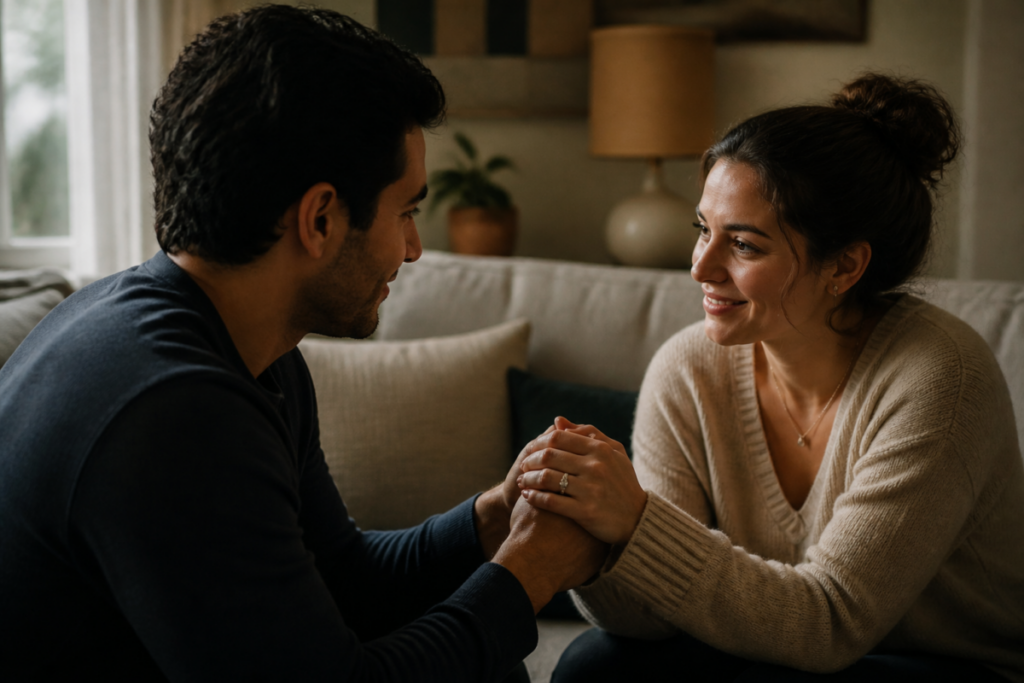
When someone lowers himself, he gives up some control over the scene. He cannot pretend the answer is guaranteed. He has to wait. That pause can show vulnerability, especially when the proposal happens in a private place with no crowd to impress.
One knee can also communicate respect. It may suggest, I am not assuming your answer.
That does not mean the person being asked has less power. In a healthy proposal, both people remain free to answer honestly.
Still, the posture does not prove maturity or commitment. A beautiful gesture cannot repair poor communication, broken trust, or a mismatch about married life. The real promise lives in what happens after the proposal. We explored a similar question in stages of a dying marriage: how to read the signs.
When the Gesture Feels Uneven
Consider a hypothetical couple, Maya and Jordan. Jordan imagines a proposal with a ring, a kneel, and a hidden photographer. Maya has always pictured a quiet talk at home because public attention makes her uncomfortable. Both visions contain love, but they do not contain the same kind of comfort.
If Jordan follows only his own picture, Maya may feel placed inside someone else’s romantic story. If Maya dismisses the gesture without explaining why, Jordan may feel that his care was rejected. The problem is not one knee. The problem is that each person is treating a private symbol as if it has one universal meaning.
This is where emotional connection matters. Before an engagement, couples benefit from discussing marriage itself, not only the surprise. Talk about money, family boundaries, work, faith, children, home life, conflict, and the kind of support you expect from each other.
Those talks may sound less cinematic than a proposal, but they protect the meaning of the moment. Romance works best when it rests on honest knowledge. The ring and the kneel can be a lovely beginning, but they should not be the first time you discuss your future.
How Proposal Customs Became Gendered, and How Couples Can Change Them
The Script We Inherit
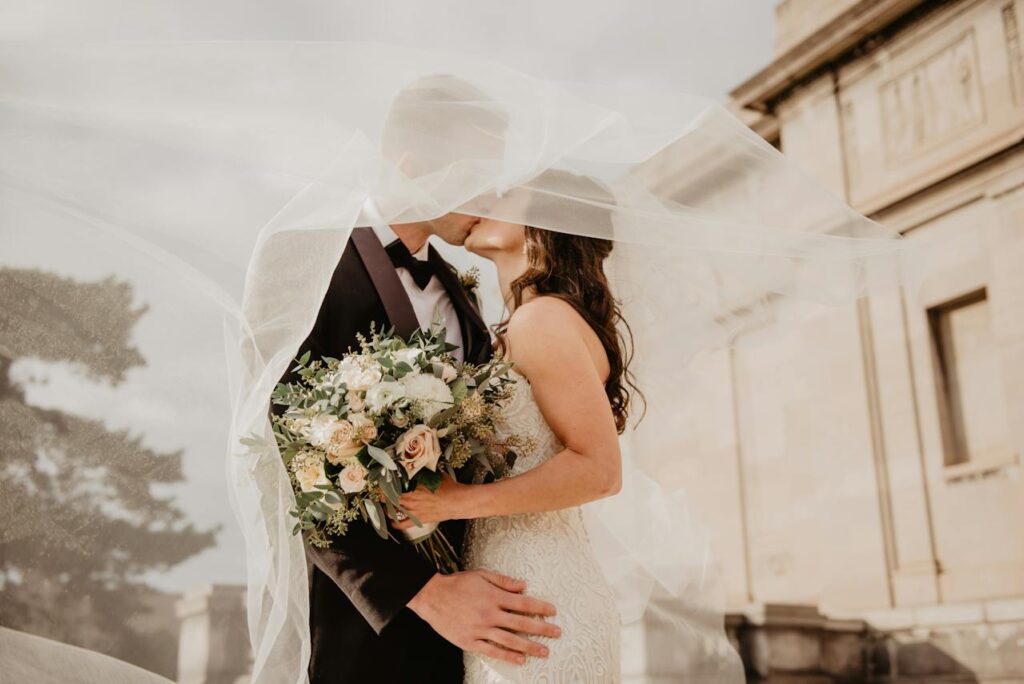
Many people grow up seeing the same proposal image in films, photographs, and family stories. A man plans the event, buys the ring, kneels, and asks. A woman receives the question. Repeated images can make a custom feel like a law, even when it is only a pattern.

That pattern may feel comfortable to one couple and limiting to another. Some partners enjoy the traditional division because it matches their shared values. Others see it as a poor fit because both people take equal responsibility for the relationship and its future.
Neither choice needs to be mocked. A traditional gesture is not automatically shallow, and a nontraditional proposal is not automatically more thoughtful. The useful question is whether the choice reflects mutual respect rather than fear of judgment.
When a couple understands the script, they can decide what to do with it. They might keep the kneeling, share the planning, choose rings together, or create two proposals. We do not have to copy a picture to make a promise.
That thought can free couples from a great deal of pressure. This connects with walkaway wife syndrome: can the marriage recover?.
Making the Proposal Fit Your Relationship
A good proposal has the couple’s fingerprints on it. That may mean a favorite trail, a kitchen conversation, a small gathering, or a simple question during an ordinary evening. The setting matters less than the attention behind it.
Start by thinking about your partner’s comfort. Does this person enjoy surprises? Would a public proposal feel exciting or stressful? Do they like grand gestures, or do they trust quiet consistency more? You may not know every detail, but you can learn a lot by listening to past comments about weddings and marriage.
You can also personalize the meaning of kneeling. Maybe the person proposing kneels because it feels respectful. Maybe both partners kneel to each other. Maybe one person sits beside the other and holds hands instead. The form can change while the message stays clear.
One practical step is to discuss the idea of marriage before planning the surprise. You do not need to reveal the exact time or place. You do need enough shared understanding to know that the question is welcome.
Surprise the moment, not the entire future. A proposal can be unexpected without making marriage itself a shock.
Does Kneeling Make a Proposal More Romantic or Meaningful?
Romance Lives in the Preparation
Suppose two proposals happen on the same evening. In one, a person kneels at a beautiful restaurant but has never asked how his partner feels about marriage. In the other, a person proposes in a modest living room after months of honest talks about their hopes and fears.
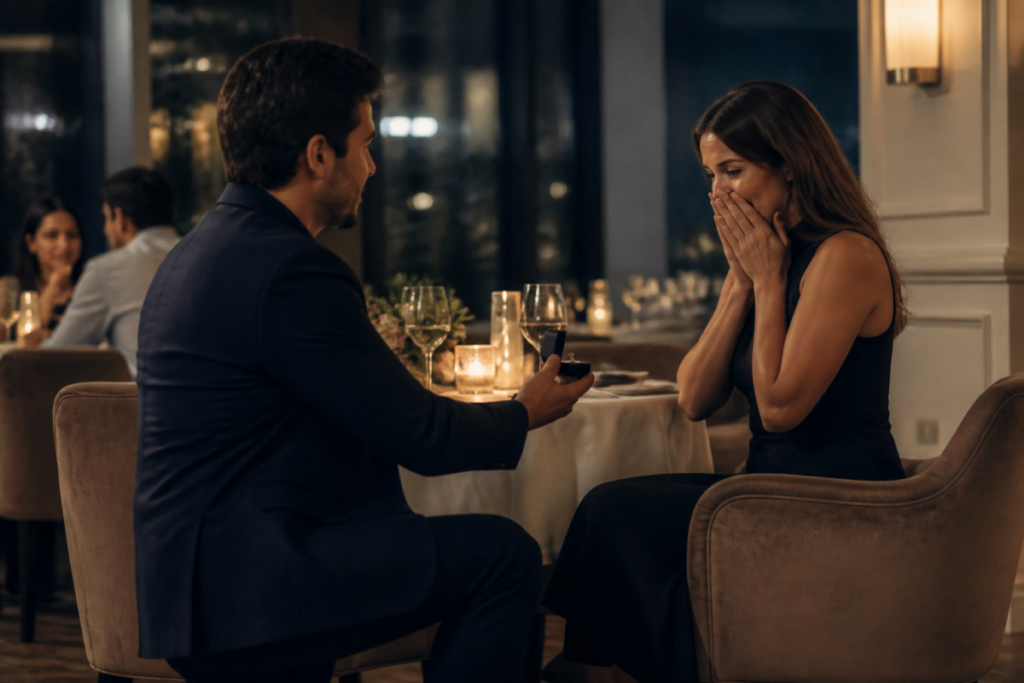
The first scene may look more romantic in a photograph. The second may carry more trust. This does not make the restaurant proposal wrong. It shows that a visual symbol and a lasting commitment are different things.
Kneeling can add emotion because it creates focus. It tells both people that an important question is being asked now. Yet the posture cannot create closeness on its own. It is like a picture frame. A frame can draw attention to a meaningful image, but it cannot supply the image.
The preparation often matters more than the pose. A thoughtful proposer considers the partner’s values, protects the partner from unwanted public pressure, and chooses words that sound true. Meaningful romance pays attention. For a closer look, see what a trophy wife really means.
If you are planning a proposal, write down what you admire in your partner and what kind of marriage you hope to build. Then turn those thoughts into a few honest sentences. You do not need a perfect speech. You need words you can live up to.
When a Different Shape Fits Better
Some people cannot kneel with ease because of pain, mobility limits, clothing, space, or simple preference. Others dislike the visual of one person standing above the other. A different posture does not reduce the love in the question.
You might sit together on a bench, hold hands across a table, stand face to face, or ask while sharing a private ritual. You might even talk about engagement first and choose the ring together later. These choices can feel less like a performance and more like a shared decision.
There is also value in asking what the kneel means to the person receiving the proposal. One person may see devotion. Another may see a power imbalance. Neither reaction should be waved away. The symbol only works when both people can receive it without feeling pushed into a role.
If the gesture feels right to you but not to your partner, listen before defending it. You are not losing romance by making room for their view. Respect is part of the proposal itself.
How to Talk About Proposal Expectations Before the Moment
Ask About Meaning, Not Just the Photo
Picture a couple talking after seeing a friend’s engagement post. One partner says, I would love something like that someday.
Instead of guessing what that means, the other asks, What part speaks to you, the kneeling, the surprise, the setting, or the public joy?

That simple question can open a useful conversation. Maybe the partner wants a private proposal but loves the idea of a speech. Maybe the ring matters more than the location. Maybe the person has never imagined a proposal at all and wants a clear talk before any dramatic moment.
Listen for the feeling under the image. A wish for one knee may mean a desire to feel chosen. A wish for privacy may mean a need for safety and calm. A wish for a family gathering may mean that shared celebration carries deep value. You may also find when a married man is hot and cold helpful.
You can ask gentle questions without giving away a planned surprise. Try asking how your partner feels about public proposals, whether kneeling seems romantic, and what would make an engagement feel personal. Keep the conversation open rather than treating it as a test.
Do not use tradition as a substitute for listening. The best proposal plan comes from knowing the person, not from copying a scene.
It also helps to discuss what engagement means after the question is answered. Will you tell family right away? Do you want a long engagement or a short one? How will you handle opinions from relatives? What does each of you need during wedding planning?
These details may seem practical, but practical care is part of love. Marriage brings grand moments and boring errands. A couple who can talk kindly about both is preparing for the real work of partnership.
So, why do men get on one knee to propose? Often, the gesture offers a visible sign of humility, respect, seriousness, and emotional risk. It has become a familiar tradition, but its value depends on the meaning the couple gives it.
Conclusion
One knee can be beautiful because it slows the moment and shows that the question matters. It can also feel wrong when it reflects pressure, habit, or a relationship script that does not fit the couple.
The strongest proposal is not the most traditional one. It is the one that respects both people, grows from honest conversations, and points toward the kind of marriage they want to build. If you are thinking about engagement, start with curiosity. Ask what the gesture means to your partner, then choose a form that feels true to both of you.
For more help with the next stage, explore related guidance on communication, trust, and the everyday choices that help a marriage stay connected.
FAQ About Why Do Men Get on One Knee to Propose
Why Do Men Traditionally Kneel When Proposing?
Men often kneel because the posture has come to symbolize respect, humility, vulnerability, and a serious request. It is a social tradition, not a required part of becoming engaged. This ties into feeling second to his ex wife: what to do.
Does a Man Have to Get on One Knee to Propose?
No. A proposal can happen while standing, sitting, walking, or holding hands. The most important parts are mutual readiness, honest words, and a proposal style that suits both partners.
What Does Kneeling During a Proposal Symbolize?
Kneeling may symbolize devotion, respect, emotional openness, and willingness to ask rather than assume. Its meaning can differ from one couple to another.
Is It Okay for a Woman to Propose to a Man?
Yes. Couples can choose who proposes, propose to each other, or discuss engagement together. A lasting partnership does not depend on following one gender based script.
Should Couples Talk About Marriage Before a Proposal?
Yes. The exact timing and setting can remain a surprise, but both partners should have a clear sense that marriage is something they may want. Discuss core hopes, concerns, and expectations before planning the engagement.